What Makes AI Videos Different From Regular Videos
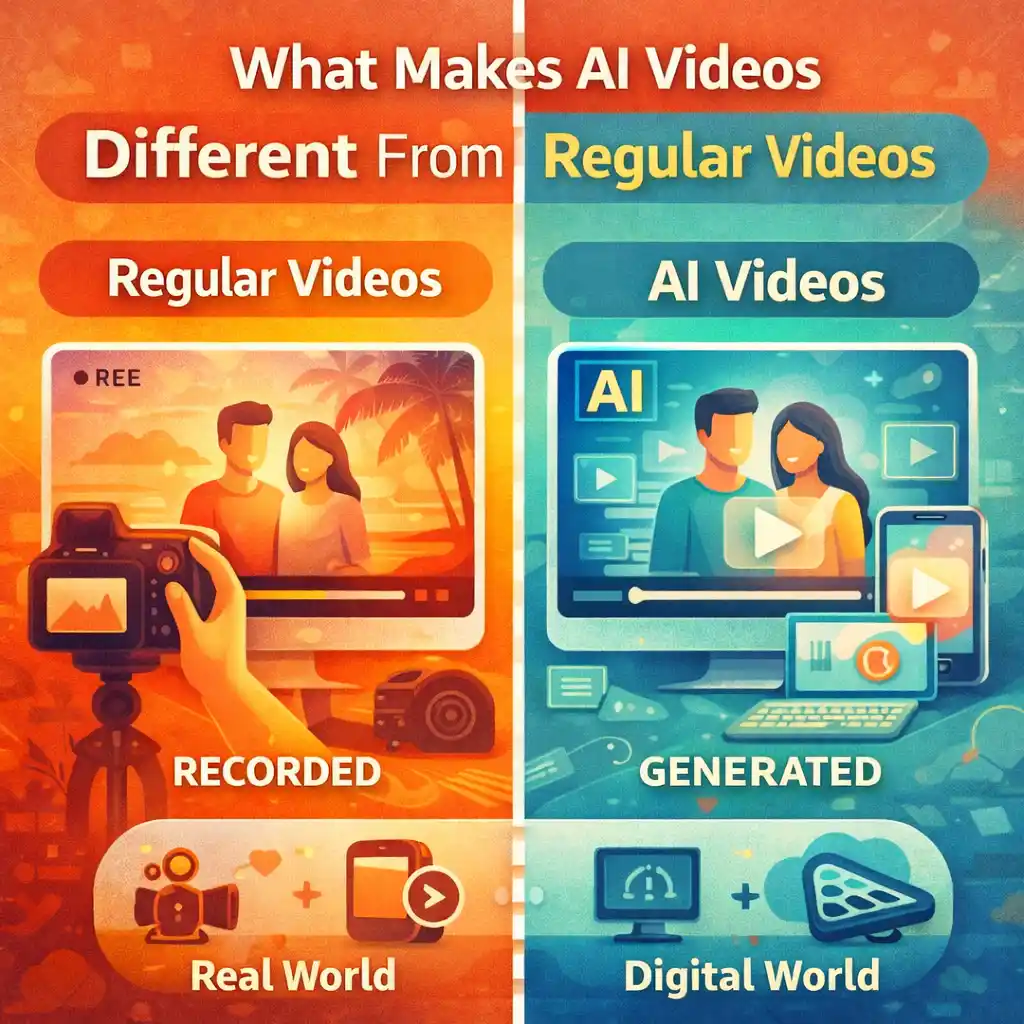
Videos are everywhere today. We watch them on phones, computers, and televisions. Some videos are recorded using cameras, while others are created using artificial intelligence. For beginners, these two types of videos may look similar at first, but they are very different in how they are made, used, and understood.
This article explains what makes AI videos different from regular videos in simple and clear words. There are no technical terms and no complicated explanations. The goal is to help normal users understand the difference easily. We will also mention Snapsora only as a utility tool that helps manage publicly available AI videos, not as a video creator.
What Are Regular Videos?
Regular videos are the type of videos people have been watching for many years.
These videos are usually made by:
-
Cameras (mobile phones, cameras, drones)
-
Real people acting or speaking
-
Real places like homes, streets, offices, or studios
To make a regular video, people usually need:
-
A camera or phone
-
Lighting
-
Sound recording
-
Editing software
In simple words, regular videos are recorded from real life.
What Are AI Videos?
AI videos are very different. They are not recorded from real life.
AI videos are:
-
Created by computer systems
-
Based on learned patterns
-
Generated digitally
Instead of using a camera, AI uses:
-
Data it has learned from many examples
-
Instructions given in text form
-
Digital systems to create motion and scenes
AI videos are created, not recorded.
Biggest Difference: Creation Method
The main difference between AI videos and regular videos is how they are made.
Regular Videos
-
Someone presses a record button
-
A camera captures real scenes
-
The video shows what actually happened
AI Videos
-
Someone provides written instructions
-
AI creates visuals using learned data
-
The video shows a generated scene
This difference alone changes everything else.
Real World vs Digital World
Regular videos belong to the real world. They show:
-
Real people
-
Real objects
-
Real environments
AI videos belong to the digital world. They show:
-
Computer-generated people
-
Artificial environments
-
Simulated motion
Even if an AI video looks realistic, it is still digitally created.
Time and Effort
Making regular videos usually takes more time.
Regular video creation often needs:
-
Planning
-
Travel
-
Equipment setup
-
Multiple recordings
AI videos:
-
Do not need travel
-
Do not need physical setup
-
Are created faster once instructions are given
This is one reason people find AI videos interesting.
Cost Difference
Regular videos can be expensive because they may require:
-
Cameras
-
Crew
-
Locations
-
Editing teams
AI videos usually:
-
Do not need physical equipment
-
Do not require actors
-
Reduce production steps
This does not mean AI videos replace regular videos, but the cost structure is different.
Flexibility and Experimentation
AI videos allow quick experimentation.
With AI videos, users can:
-
Try different ideas easily
-
Change scenes without re-recording
-
Explore creative concepts
Regular videos require re-shooting if something changes.
Reality and Proof
This is a very important difference.
Regular videos:
-
Can be proof of an event
-
Show something that really happened
AI videos:
-
Are not proof
-
Are generated visuals
-
Should not be treated as real events
Understanding this difference helps avoid confusion.
Editing Process
Regular videos are edited after recording. Editors cut clips, adjust colors, and add sound.
AI videos:
-
Are generated already edited
-
Do not require traditional editing steps
-
Are shaped during creation, not after
This changes how people work with video content.
Learning Curve
Regular video creation requires learning:
-
Camera handling
-
Lighting
-
Editing software
AI video creation requires:
-
Clear instructions
-
Understanding of visual description
Both have learning curves, but they are very different skills.
Use Cases Are Different
Regular videos are often used for:
-
News
-
Events
-
Personal memories
-
Real-life documentation
AI videos are often used for:
-
Learning demonstrations
-
Creative ideas
-
Visual examples
-
Concept explanation
Each type serves a different purpose.
Public Sharing and Access
Once videos are shared publicly:
-
Anyone can view them
-
They can be discussed or studied
AI videos shared publicly may be managed by users for learning or reference. Utility tools like Snapsora help users manage such publicly available AI videos, but they do not create or control them.
Watermarks and Identification
Many AI videos include watermarks. These help:
-
Identify the source
-
Protect creators
-
Show that the content is generated
Regular videos may or may not include watermarks.
Watermarks help viewers understand the nature of the content.
Ethical Responsibility
Because AI videos can look realistic, users must be careful.
Users should:
-
Not confuse AI videos with real events
-
Avoid spreading misleading content
-
Respect platform rules
Regular videos also require responsibility, but AI videos need extra awareness.
Emotional Connection
Regular videos often create stronger emotional connections because:
-
They show real people
-
They capture real moments
AI videos may feel creative or impressive, but the emotional connection is usually different.
Storage and File Handling
Both AI videos and regular videos are stored as files once they exist.
Users may want to:
-
Organize them
-
Keep them for reference
-
Study them later
Utility tools like Snapsora help users manage publicly available AI video files in a simple way.
Common Confusion for Beginners
Beginners often think:
-
AI videos are recorded secretly
-
AI videos show real scenes
This is not true. AI videos are generated, not recorded.
Learning this difference is very important.
Why Both Types Will Continue to Exist
AI videos will not fully replace regular videos.
Regular videos are needed for:
-
Real events
-
Personal memories
-
News and documentation
AI videos will continue to grow in:
-
Creativity
-
Education
-
Visual explanation
Both have their place.
Simple Way to Remember the Difference
A very easy rule:
-
Regular video = recorded from real life
-
AI video = created by computer systems
This simple idea explains everything.
Conclusion
AI videos and regular videos may look similar on screens, but they are very different in how they are created, used, and understood. Regular videos come from the real world, while AI videos come from the digital world. Knowing this difference helps users watch, share, and manage videos responsibly.
Utility tools like Snapsora only help users manage publicly available AI videos. They do not create videos or change their meaning. With clear understanding, users can enjoy both types of videos without confusion.
Responsibility & Disclaimer
This article is for educational purposes only. Snapsora is a utility tool designed to help users manage publicly available AI video content responsibly. It does not generate, host, own, or control any video content. Users are responsible for respecting content ownership, platform policies, and applicable rules when working with online videos.