Understanding Digital Ownership In Online Videos
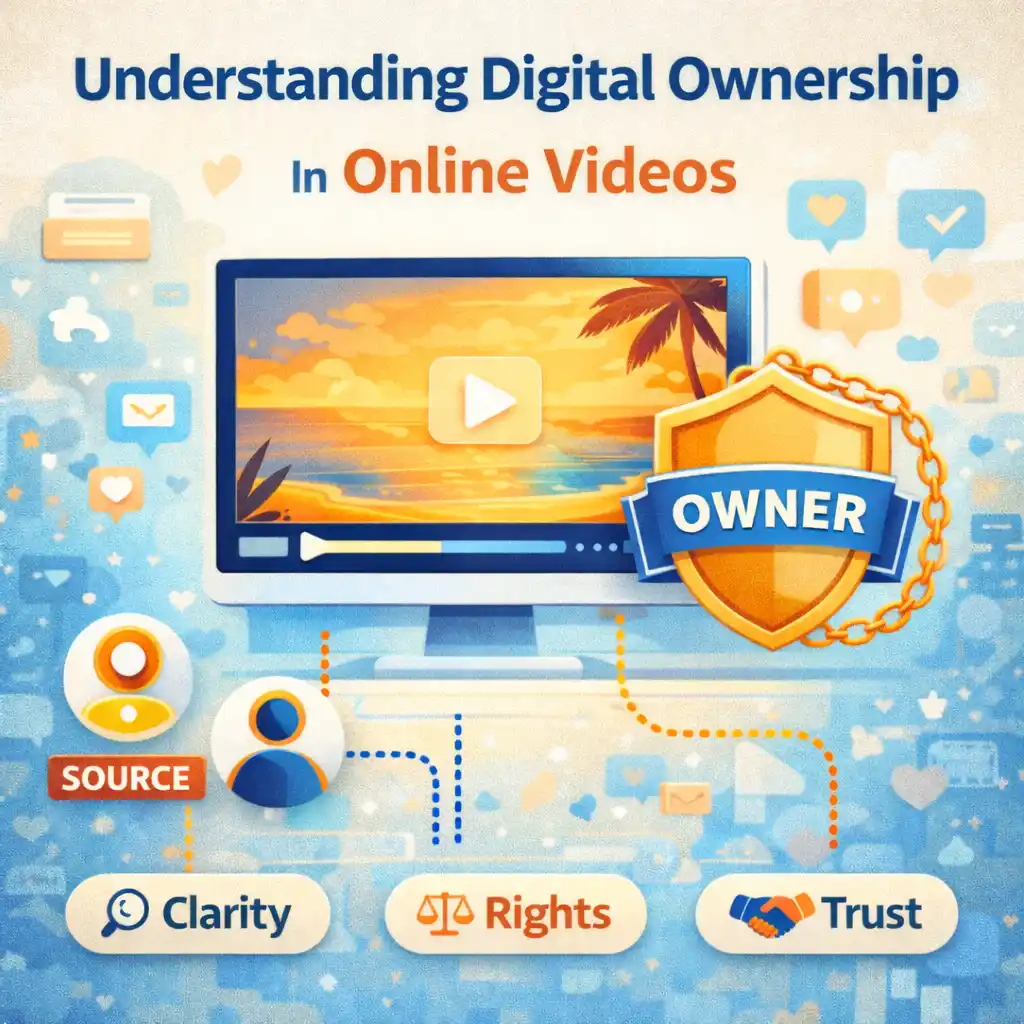
Online videos are everywhere today. People watch, share, save, and discuss videos on social media, learning platforms, and websites every day. Because videos move so fast across the internet, many users feel confused about who owns a video, who has rights, and what digital ownership really means.
This confusion becomes even bigger when videos are AI-generated or shared publicly. Beginners often assume that if a video is online, it belongs to everyone. That is not true.
This article explains digital ownership in online videos in simple and easy words, so anyone can understand it. There are no legal terms and no complex language. The focus is on awareness, clarity, and responsible understanding.
We will also mention Snapsora only as a utility tool that helps users manage publicly available videos, not as a content owner or creator.
What Does “Digital Ownership” Mean?
Digital ownership means who legally controls a piece of digital content, such as a video.
In simple words, digital ownership answers questions like:
-
Who created the video?
-
Who has the right to share it?
-
Who can allow others to use it?
Just because a video is easy to copy or view does not mean ownership disappears.
Ownership Does Not Change Just Because a Video Is Online
A very common misunderstanding is:
“If a video is online, it belongs to everyone.”
This is incorrect.
When a video is uploaded:
-
Ownership stays with the creator or platform
-
Public viewing does not mean public ownership
-
Rights do not disappear
The internet only makes videos accessible, not ownerless.
Who Owns an Online Video?
In most cases, an online video is owned by:
-
The person who created it
-
Or the platform that produced it
Ownership depends on:
-
Who made the video
-
Where it was published
-
What rules the platform uses
Even AI-generated videos have ownership rules defined by their platforms.
Viewing a Video vs Owning a Video
There is a big difference between viewing and owning.
Viewing means:
-
You can watch the video
-
You can learn from it
-
You can discuss it
Owning means:
-
You control how it is used
-
You decide who can share it
-
You hold rights over it
Most users are viewers, not owners.
Sharing Does Not Mean Ownership
Sharing a video link does not mean you own the video.
When you share:
-
You are passing access, not rights
-
The original owner stays the same
-
You are not claiming the content
Sharing responsibly means understanding this difference.
Digital Ownership and AI-Generated Videos
AI-generated videos add another layer of confusion.
Even though AI creates visuals:
-
AI does not “own” content like humans
-
Platforms define ownership rules
-
Creators or services hold rights
AI is a tool, not a legal owner.
Why Platforms Use Watermarks and Labels
Platforms often add watermarks or labels to videos. These exist to:
-
Show ownership
-
Identify the source
-
Prevent false claims
Watermarks help users understand that the video belongs to someone, even when shared widely.
Public Access Does Not Remove Rights
Many videos are publicly accessible, meaning:
-
Anyone can watch them
-
Anyone can view them freely
But public access does not mean:
-
Free ownership
-
Permission to claim the video
-
Right to misuse it
This distinction is very important.
Personal Use vs Claiming Ownership
People often save videos for:
-
Learning
-
Reference
-
Inspiration
This is different from claiming ownership.
Personal use means:
-
You use the video privately
-
You do not claim it as yours
-
You do not misrepresent it
Ownership remains unchanged.
Role of Utility Tools in Digital Ownership
Some users want to:
-
Organize videos
-
Save them for study
-
Manage files better
Utility tools like Snapsora help users manage publicly available videos. They do not:
-
Change ownership
-
Remove rights
-
Transfer control
Ownership stays exactly where it was.
Why Digital Ownership Matters
Understanding digital ownership matters because it:
-
Protects creators
-
Prevents misuse
-
Builds trust online
When users respect ownership:
-
Platforms stay healthy
-
Creators feel safe
-
Content remains reliable
Common Mistakes Beginners Make
Beginners often think:
-
“If I can download it, I own it”
-
“If it has no name, it is free”
-
“AI content has no owner”
These ideas are incorrect and lead to confusion.
Ownership vs File Possession
Having a video file does not mean owning the video.
This is similar to:
-
Borrowing a book
-
Watching a movie
-
Reading an article
You may access it, but ownership stays with the original source.
Why Digital Ownership Protects Viewers Too
Ownership is not only for creators. It also protects viewers by:
-
Preventing fake content
-
Reducing misinformation
-
Keeping sources clear
Clear ownership helps people trust what they see.
Digital Ownership in Learning and Research
In learning environments:
-
Videos are used as examples
-
Content is studied
-
Ideas are discussed
Respecting ownership ensures:
-
Honest learning
-
Proper credit
-
Ethical education
How Ownership Builds Accountability
When ownership is clear:
-
Creators are responsible for content
-
Platforms maintain standards
-
Viewers know the source
This accountability improves content quality.
Why Ownership Still Matters in the AI Era
Some people believe AI removes ownership concerns. This is not true.
Even with AI:
-
Someone controls the system
-
Someone defines the rules
-
Someone holds responsibility
Ownership still exists, even if creation looks different.
Digital Ownership and Trust
Trust grows when:
-
Ownership is visible
-
Sources are clear
-
Rights are respected
Videos without clear ownership often create doubt and confusion.
How Users Can Respect Digital Ownership
Users can respect ownership by:
-
Acknowledging sources
-
Avoiding false claims
-
Understanding access limits
Responsible behavior keeps the digital world fair.
The Long-Term Impact of Ownership Awareness
When people understand ownership:
-
Misuse decreases
-
Content quality improves
-
Online spaces become safer
Education is the key to this awareness.
Simple Way to Remember Digital Ownership
A very easy rule:
-
Watching does not mean owning
-
Sharing does not mean controlling
-
Access does not mean rights
Ownership stays with the creator or platform.
Why Beginners Should Learn This Early
Learning about digital ownership early helps beginners:
-
Avoid mistakes
-
Use content responsibly
-
Build digital maturity
This knowledge is useful for life.
Digital Ownership Is Part of Digital Respect
Respecting digital ownership is similar to respecting:
-
Physical property
-
Creative work
-
Human effort
It is part of being a responsible internet user.
Conclusion
Digital ownership in online videos means understanding who controls, owns, and is responsible for video content, even when that content is easy to access or share. Just because a video is online or publicly available does not mean it belongs to everyone. Ownership stays with the creator or platform.
Utility tools like Snapsora help users manage publicly available videos for learning or reference, but they do not change ownership or rights. By understanding digital ownership, users can enjoy online videos while respecting creators, platforms, and digital ethics.
Responsibility & Disclaimer
This article is for educational purposes only. Snapsora is a utility tool designed to help users manage publicly available AI video content responsibly. It does not generate, host, own, or control any video content. Users are responsible for respecting content ownership, platform policies, and applicable rules when interacting with online videos.