How Snapsora Processes Publicly Available AI Videos
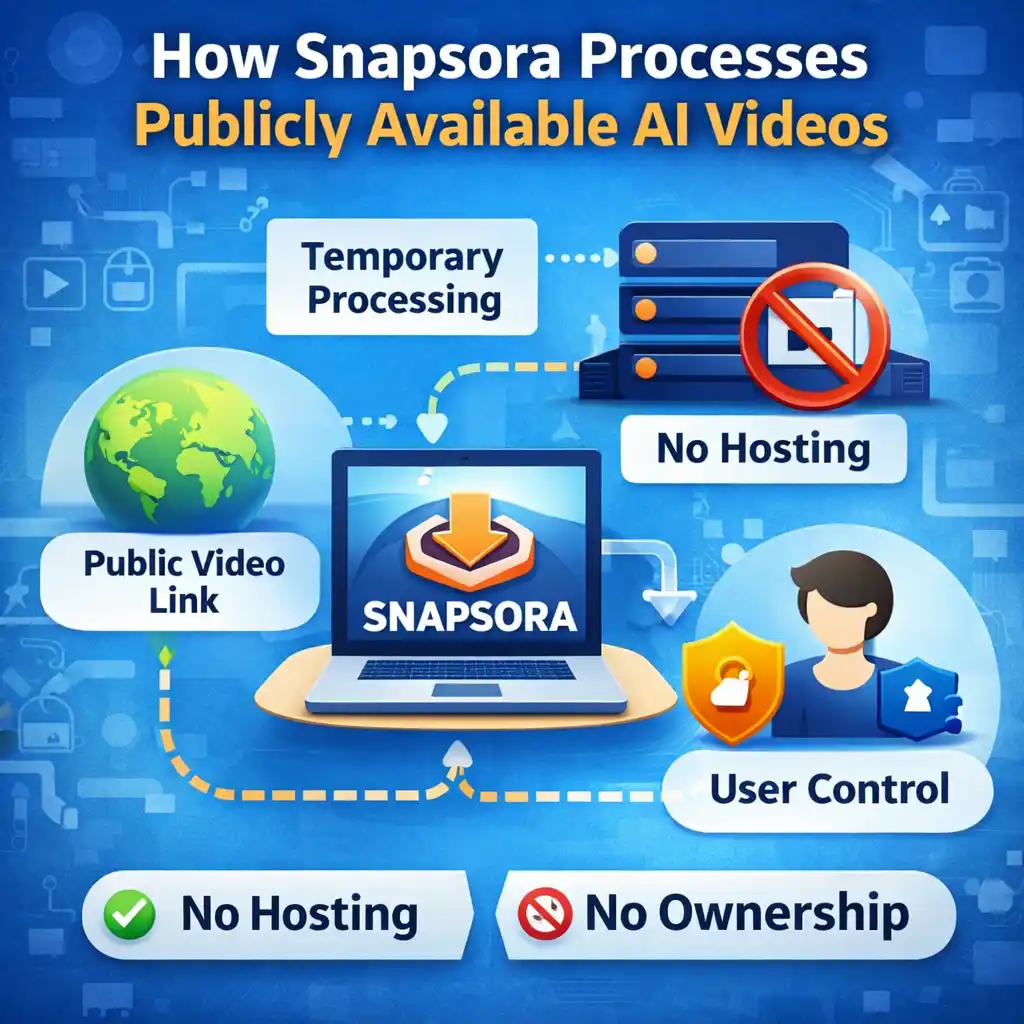
As AI-generated videos become more visible online, many users want to understand how utility tools interact with publicly available content. Transparency is especially important when it comes to video tools, because users often worry about issues like hosting, ownership, and data usage. This article explains how Snapsora processes publicly available AI videos, with a clear focus on no hosting and no ownership.
The goal is to help beginners understand what actually happens behind the scenes—without technical confusion or misleading assumptions.
What “Publicly Available AI Videos” Means
Before explaining Snapsora’s process, it is important to understand the term publicly available.
A publicly available AI video is a video that:
-
Is already accessible online through an open link
-
Does not require private login credentials to view
-
Is shared by its original platform or creator
Snapsora only works with videos that users already have access to. It does not unlock restricted content or interact with private systems.
Snapsora’s Core Principle: Transparency First
Snapsora is built on a simple principle: process, not possession.
This means:
-
The tool does not claim ownership of any video
-
The tool does not host videos on its servers
-
The tool does not archive or redistribute content
Snapsora’s role is limited to helping users handle video files, not control them.
Step-by-Step: How Snapsora Processes Videos (High-Level)
Snapsora uses a link-based, temporary process. No advanced technical knowledge is needed to understand the flow.
1. User Provides a Public Video Link
The process begins when a user submits a link to a video that is already publicly accessible online. Snapsora does not search for content on its own.
2. Temporary Link Analysis
Snapsora temporarily analyzes the link to understand:
-
Video availability
-
File format
-
Basic technical properties
This analysis is automatic and task-specific.
3. No Video Hosting
At no point does Snapsora upload or permanently store the video. The tool does not maintain a video library or database of content.
4. Direct User-Side Handling
Once the process is complete, the video file is handled on the user’s device. Snapsora’s involvement ends there.
This approach keeps the system lightweight and privacy-focused.
Why Snapsora Does Not Host Videos
Video hosting requires storage, bandwidth, and content responsibility. Snapsora intentionally avoids this model.
Reasons include:
-
Respecting original content ownership
-
Reducing legal and ethical risks
-
Improving user privacy
-
Keeping the tool fast and simple
By avoiding hosting, Snapsora stays within its role as a utility tool, not a content platform.
No Ownership: What That Really Means
Ownership of a video always remains with:
-
The original creator
-
Or the platform where the video was published
Snapsora does not modify ownership rights, metadata, or attribution. It simply helps users manage content they already have access to.
Understanding this boundary is essential for responsible usage.
Privacy and Data Handling
Transparency also applies to user data.
Snapsora follows a minimal data approach:
-
No user accounts required
-
No long-term data retention
-
No permanent video storage
This reduces exposure and helps users feel more confident when using the tool.
User Responsibility Still Matters
Even with transparent processing, responsibility does not disappear. Users should:
-
Respect platform policies
-
Understand personal vs commercial use
-
Avoid redistributing content without permission
Snapsora supports awareness, but ethical use depends on the user’s decisions.
Common Misunderstandings Clarified
Some users mistakenly believe that video tools:
-
Store videos secretly
-
Claim rights over content
-
Act as content platforms
Snapsora does none of these. Its design is intentionally limited to avoid such concerns.
Why Transparency Builds Trust
Clear processes build trust. When users understand:
-
What a tool does
-
What it does not do
-
Where responsibility lies
they can make informed choices. Snapsora’s transparent design helps create that clarity.
Conclusion
Snapsora processes publicly available AI videos through a simple, temporary, and transparent system. It does not host videos, store content, or claim ownership. Its role is limited to helping users manage video files responsibly and efficiently.
For beginners, this clarity is important. Understanding how tools like Snapsora work helps users stay informed, respectful, and confident while navigating AI-generated content.
Responsibility & Disclaimer
Snapsora is a utility tool designed to help users manage publicly available AI video content responsibly. It does not host, own, or control video content. Users are responsible for respecting content ownership, platform policies, and applicable rules when using any online video tool.